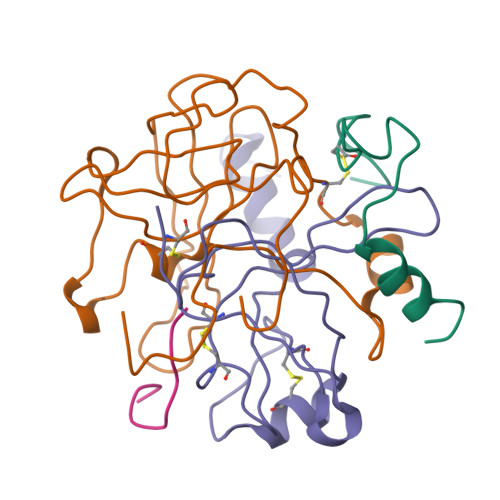
Fibrinogen alpha chain
Homo sapiensTaxon: 9606
866
氨基酸
95.0 kDa
理论值
39
PDB 条目
3
已记录
功能描述
定位与分布
组织特异性
Detected in blood plasma (at protein level)
相关疾病
Congenital afibrinogenemia
Rare autosomal recessive disorder is characterized by bleeding that varies from mild to severe and by complete absence or extremely low levels of plasma and platelet fibrinogen.
Amyloidosis, hereditary systemic 2
A form of hereditary systemic amyloidosis, a disorder characterized by amyloid deposition in multiple tissues resulting in a wide clinical spectrum. AMYLD2 is an autosomal dominant form characterized by deposition of amyloid preferentially in the glomeruli of the kidney. It clinically presents with hypertension, proteinuria, and finally azotemia. Involvement of liver and spleen may be seen in advanced cases, but heavy glomerular deposition without significant medium sized vessel involvement is characteristic of the disease.
Dysfibrinogenemia, congenital
A disorder characterized by qualitative abnormalities (dysfibrinogenemia) of the circulating fibrinogen. Affected individuals are frequently asymptomatic, but some patients have bleeding diathesis, thromboembolic complications, or both. In some cases, dysfibrinogenemia is associated with low circulating fibrinogen levels (hypodysfibrinogenemia).
氨基酸序列
MFSMRIVCLVLSVVGTAWTADSGEGDFLAEGGGVRGPRVVERHQSACKDSDWPFCSDEDW
NYKCPSGCRMKGLIDEVNQDFTNRINKLKNSLFEYQKNNKDSHSLTTNIMEILRGDFSSA
NNRDNTYNRVSEDLRSRIEVLKRKVIEKVQHIQLLQKNVRAQLVDMKRLEVDIDIKIRSC
RGSCSRALAREVDLKDYEDQQKQLEQVIAKDLLPSRDRQHLPLIKMKPVPDLVPGNFKSQ
FASTA 格式 · 866 个氨基酸 · 分子量 95.0 kDa
实验结构
39 PDB 条目翻译后修饰
- •The alpha chain is normally not N-glycosylated (PubMed:23151259), even though glycosylation at Asn-686 was observed when a fragment of the protein was expressed in insect cells (PubMed:9689040). It is well known that heterologous expression of isolated domains can lead to adventitious protein modifications. Besides, glycosylation at Asn-686 is supported by large-scale glycoproteomics studies (PubMed:16335952, PubMed:19159218), but the evidence is still quite tenuous. Most likely, Asn-686 is not glycosylated in the healthy human body, or only with low efficiency
- •O-glycosylated
- •Forms F13A-mediated cross-links between a glutamine and the epsilon-amino group of a lysine residue, forming fibronectin-fibrinogen heteropolymers
- •About one-third of the alpha chains in the molecules in blood were found to be phosphorylated
- •Conversion of fibrinogen to fibrin is triggered by thrombin, which cleaves fibrinopeptides A and B from alpha and beta chains, and thus exposes the N-terminal polymerization sites responsible for the formation of the soft clot. The soft clot is converted into the hard clot by factor XIIIA which catalyzes the epsilon-(gamma-glutamyl)lysine cross-linking between gamma chains (stronger) and between alpha chains (weaker) of different monomers
- •Phosphorylated by FAM20C in the extracellular medium